
The Silent Threat in Triangle-Area Homes, and the Monitor I Trust to Catch It
After 15 years in HVAC, I've seen plenty of homes with air quality problems homeowners never knew existed. Radon is the worst of them, and it's especially common in our part of North Carolina. Here's the device I keep in my own home, and the one I recommend to every TTP customer who asks.
Radon Isn't a "Maybe" Problem in North Carolina
Radon is a naturally occurring radioactive gas that seeps up from the ground through cracks in foundations, slabs, and crawl spaces. You can't see it, smell it, or taste it. According to the U.S. EPA, radon is the second leading cause of lung cancer in the country, second only to smoking. Living in a home with elevated radon is, statistically, like smoking around 10 cigarettes a day.
The Triangle sits in an area of North Carolina with documented radon concerns. Wake, Durham, Orange, and surrounding counties all have homes that have tested above the EPA's action level of 4.0 pCi/L. And here's the part most homeowners don't realize: two houses on the same street can have completely different radon readings. Soil composition, foundation type, ventilation, even how tightly your house is sealed all matter. The only way to know your home's level is to test it.
Why This Is the Monitor in My Own House
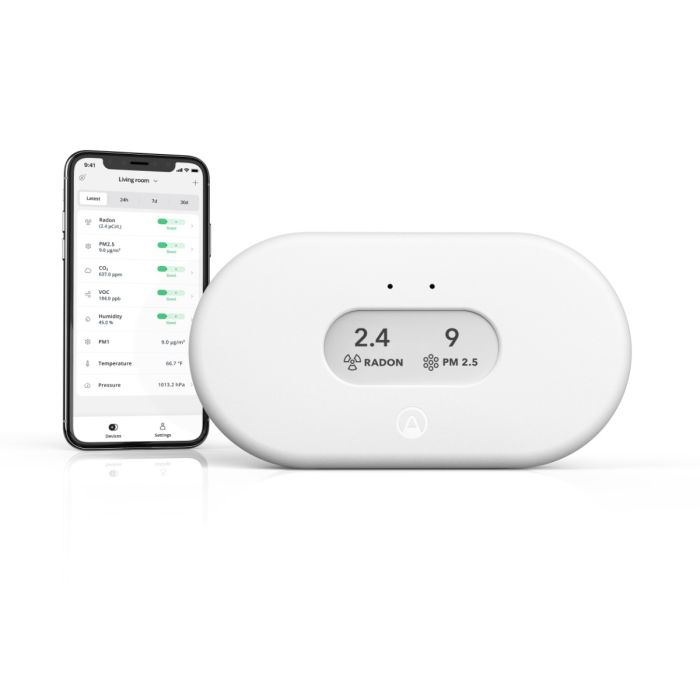
Most consumer "air quality monitors" track temperature and humidity and call it a day. The Airthings View Plus is the only consumer-grade device I've found that measures radon continuously alongside the other six things that matter most for indoor air: PM 2.5, CO₂, VOCs, temperature, humidity, and barometric pressure.
Continuous radon monitoring is the part that earns this device a spot in my recommendation. A short-term test kit gives you a snapshot. The View Plus gives you a rolling picture over weeks and months, which is what you actually need, because radon levels swing with the seasons, the weather, and how your HVAC system is running.
If this were my home, here's what I'd do.
Joel Verley, Owner, Triangle Trade Professionals
Everything That Matters, in One Place
Radon
The #1 reason this device exists. Continuous, long-term monitoring.
PM 2.5
Fine particles from cooking, smoke, wildfires. Goes deep into lungs.
CO₂
High levels = poor sleep and foggy thinking.
VOCs
Off-gassing from cleaners, paint, new furniture.
Temperature
Optimal sleep is 60–65°F.
Humidity
30–60% is the safe zone for mold and dust mites.
Pressure
Tracks weather shifts that affect indoor air.
What Else Clean Air Means for Your Family
Allergies & Asthma
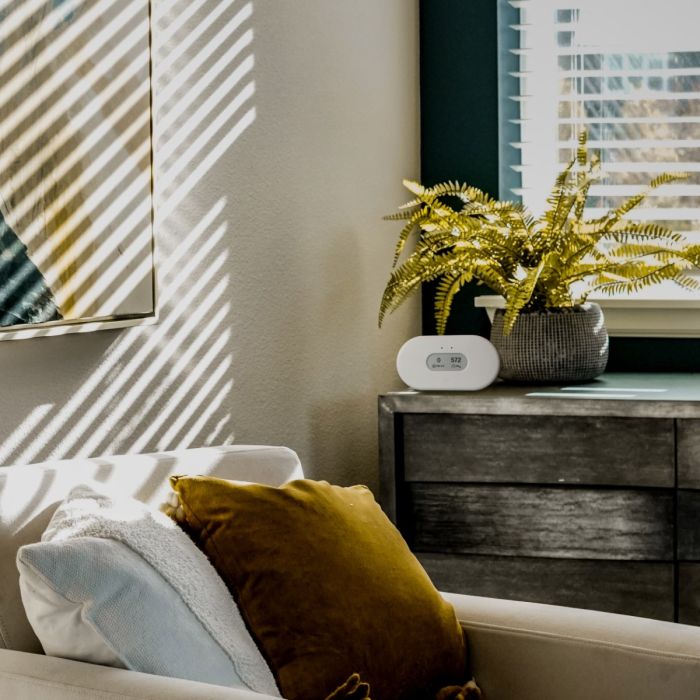
If anyone in your house has seasonal allergies or asthma, indoor air is half the battle. The View Plus tracks PM 2.5 and humidity in real time, so you can see when it's time to run the HEPA filter, drop the humidifier, or close the windows on a high-pollen day.
Sleep & Focus
CO₂ levels rise overnight in closed bedrooms. Studies show that high indoor CO₂ measurably reduces sleep quality and next-day cognitive performance. The View Plus tells you when your bedroom needs ventilation, usually a cracked window does the job.
Wildfires & Pollutants
Wildfire smoke from the mountains has reached the Triangle multiple times in recent years. PM 2.5 monitoring tells you when to seal the house up and run filtration, and when it's safe to open the windows again.
Designed to Be Useful, Not Annoying
E-ink display
Always on, easy to read, sips power. Shows up to four values you choose.
Color status indicator
Motion-activated. Green, yellow, or red, you know at a glance.
Flexible power
Battery for cable-free placement, or USB-C for always-on monitoring.
Smart home hub
Works with Alexa, Google Assistant, IFTTT. Acts as a hub for other Airthings Wave devices.
Save 10% on Your Airthings View Plus
Drop your name and email below. We'll unlock your discount code instantly. No spam, just the code, and the occasional honest note from us about indoor air quality in the Triangle.
Common Questions
Know Your Air. Protect Your Family.
The cheapest version of solving an indoor air problem is knowing you have one in the first place.